

Why Do I Write Sci-fi?

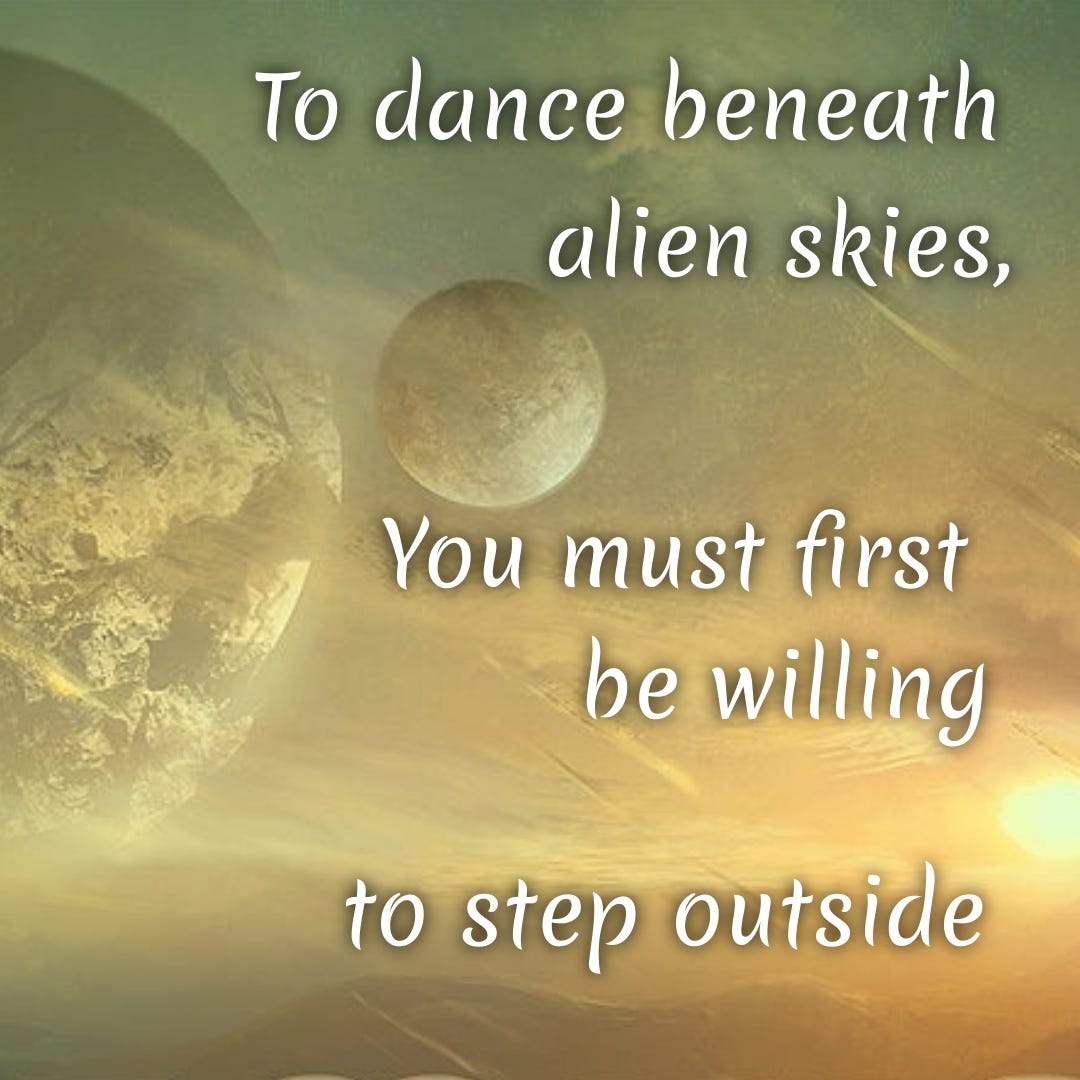
“Why do you write sci-fi?”
For as many times as I’ve been asked this question, you’d think I’d have an answer. I would list-off influences from my childhood, my generational notions, my psychological and philosophical beliefs and say “So, you see, it’s obvious.”
Except that I watched more John Wayne Westerns than (TOS) Star Trek, read more historical fiction (and historical romances) than Asimov and Le Guin, and you were more likely to find me climbing a tree in a Laura Ingalls inspired dress than building a rocket in grimy coveralls.
I don’t have a simple answer as to why I write science fiction, beyond “because I can.” Dremiks was always, from the first moment I unfolded the slip of paper with that one-word prompt on it, a space story. Aliens and blasters and orbital insertion vectors, life on distant planets or existing in unexplored reaches of our own home world, are just fascinating mysteries that need to be explored. Space as the final frontier is just a natural extension of all those Western adventure stories. And I do genuinely enjoy science—so much so that I became an event coach for our Science Olympiad team!
I don’t just write science fiction, though. My “what genre does this belong in?” novel The Sentinels: Requital started as a fanfiction story about a certain verdant archer. I pulled it out of the archives during the pandemic, stripped away anything even hinting at copyrighted or trademarked material, and made something my own. Medical shows are my third favorite genre to watch (the second being police procedurals and the first being shows about space cowboys and their wacky fun), so writing the futuristic medical enhancements that turned Nicholas Reed from a billionaire playboy into a modern-day Robin Hood is a fun exercise.
Buried in an old college-ruled notebook (disingenuously labeled Hist 105) is a historical religious fantasy novel that I really need to finish. It’s about angels and immortal human servants. My husband would appreciate it if I’d complete the damn thing so he could read it. He’s only been waiting 30 years!
An older Trapper-Keeper™ holds most of a 60,000 word historical romance set in England during the Restoration. I wrote it in the 7th and 8th grades. It will never be read by anyone else, but I wrote it and I’m glad that I did.
If I was traditionally published with a fancy agent, a demanding editor, advances and deadlines, I would be pigeonholed into writing in one specific genre. Thankfully, I am not a successful author. I can be the middle-aged, sharp tongued, Southern woman who can write about space stations, aliens, political intrigue, vigilantes with a redemptive arc, and, yes, someday, immortal humans serving the angels through the vast centuries of human existence. I might even dust off that Western romance about the gambler and his lady-friend who travel from town to town getting into adventures.
I write the stories in my head, with little thought given to genre or setting.
Asking me why I write sci-fi is really just asking me why I write.
You might as well ask why I breathe.
Clicking on the book links in the text of this post will take you directly to the US Amazon page.
**This post, as with all of my posts, is written without the aide of AI.
I smiled when you said that people expect a neat explanation for why you write sci-fi, and then spent the rest of the essay proving that stories refuse neat categories. The image that stayed with me wasn't a spaceship at all—it was the old notebooks still waiting on a shelf. I think every writer has worlds that have patiently outlived the years, waiting for the moment we're finally ready to return to them.
This resonates!!
write the stories in my head, with little thought given to genre or setting.
Asking me why I write sci-fi is really just asking me why I write.